
Dinoplagne
Field Stations
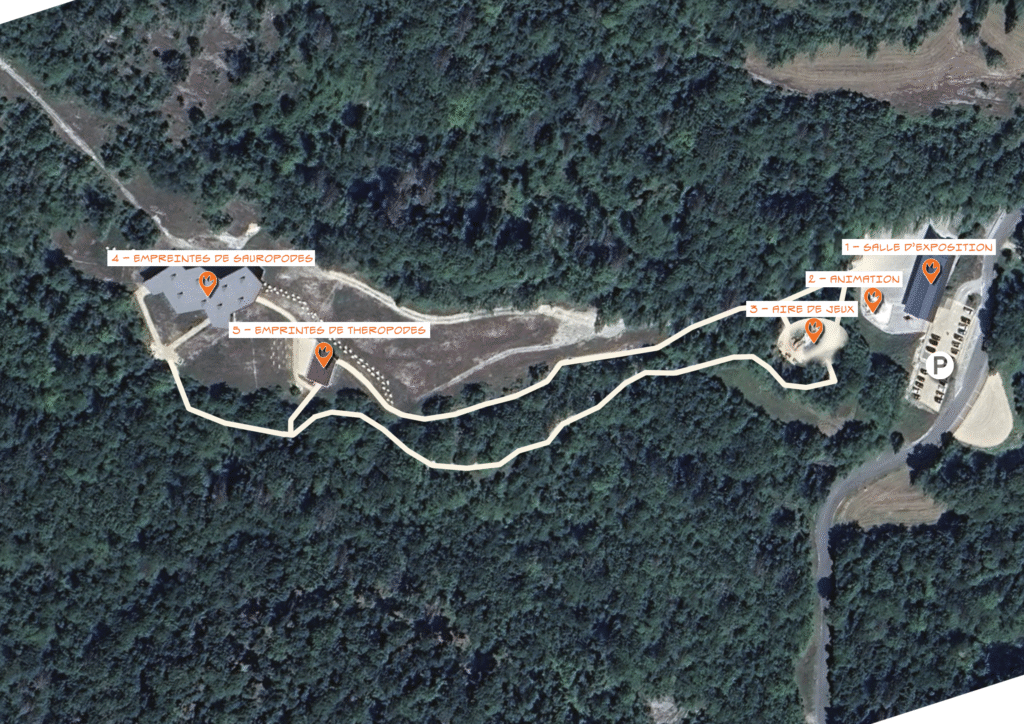
A site to explore
Dinoplagne holds one of the longest sauropod trackways ever found, laid down 150 million years ago and uncovered in 2009. Around 10,000 people a year come to look at it.
The public tender asked for play modules for younger children along the existing 1.2 kilometre trail. Morgan Fix Creative won the tender, then reframed the question.
The problem was not the age range. It was that the whole site had been built to be observed. Panels, frames, a viewpoint. Nothing to touch, nothing to complete, no reason to reach the end of the walk.
So we delivered a ten-year development strategy for turning it into a park you explore, and a first phase small enough to enhance the guest experience for 39k€.
Everything below was built inside that budget.
Where it went
Everything on this trail is real. Real footprints, real stratigraphy, real research. So nothing we added was allowed to feel like a theme park bolted onto a scientific site.
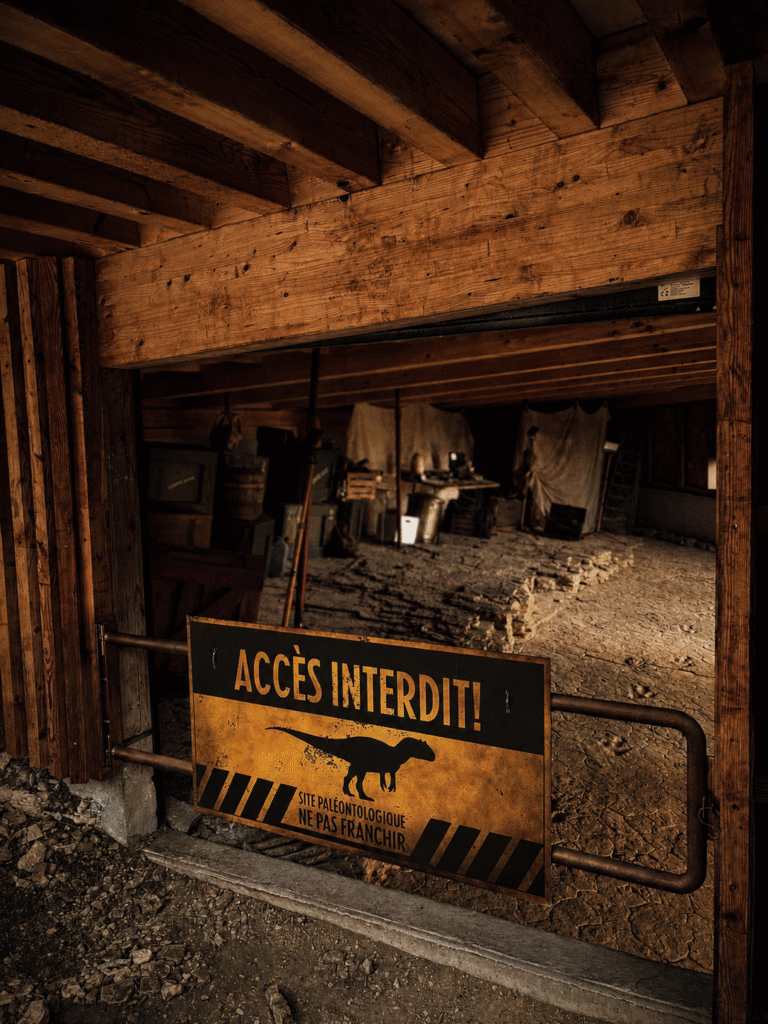
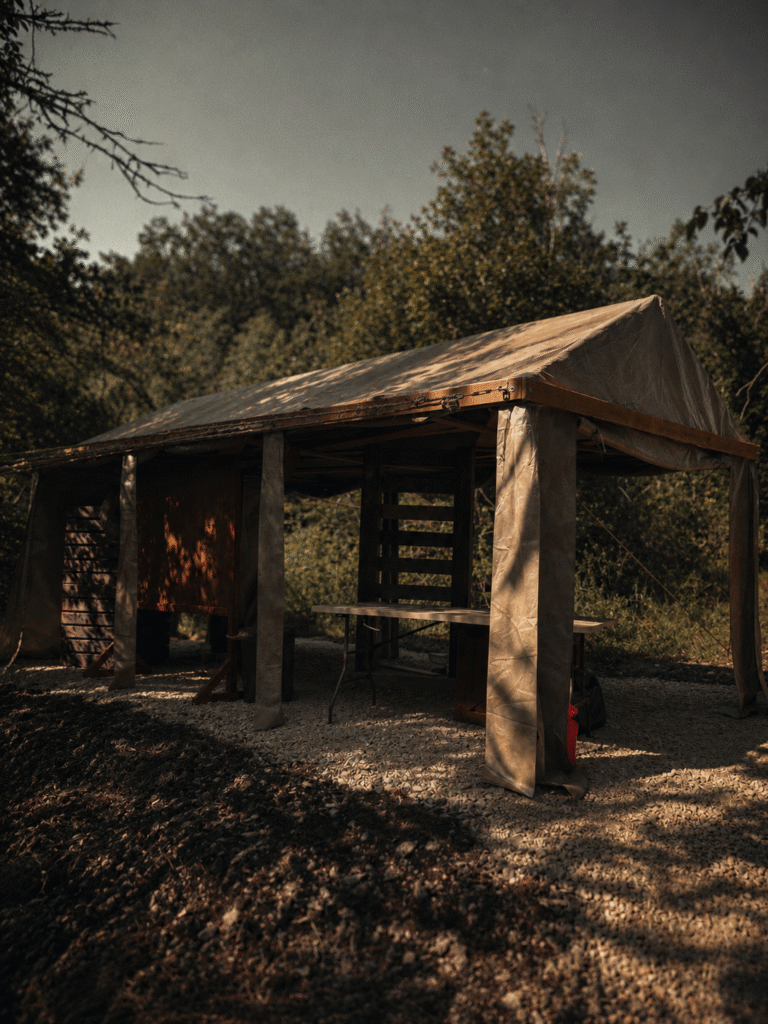
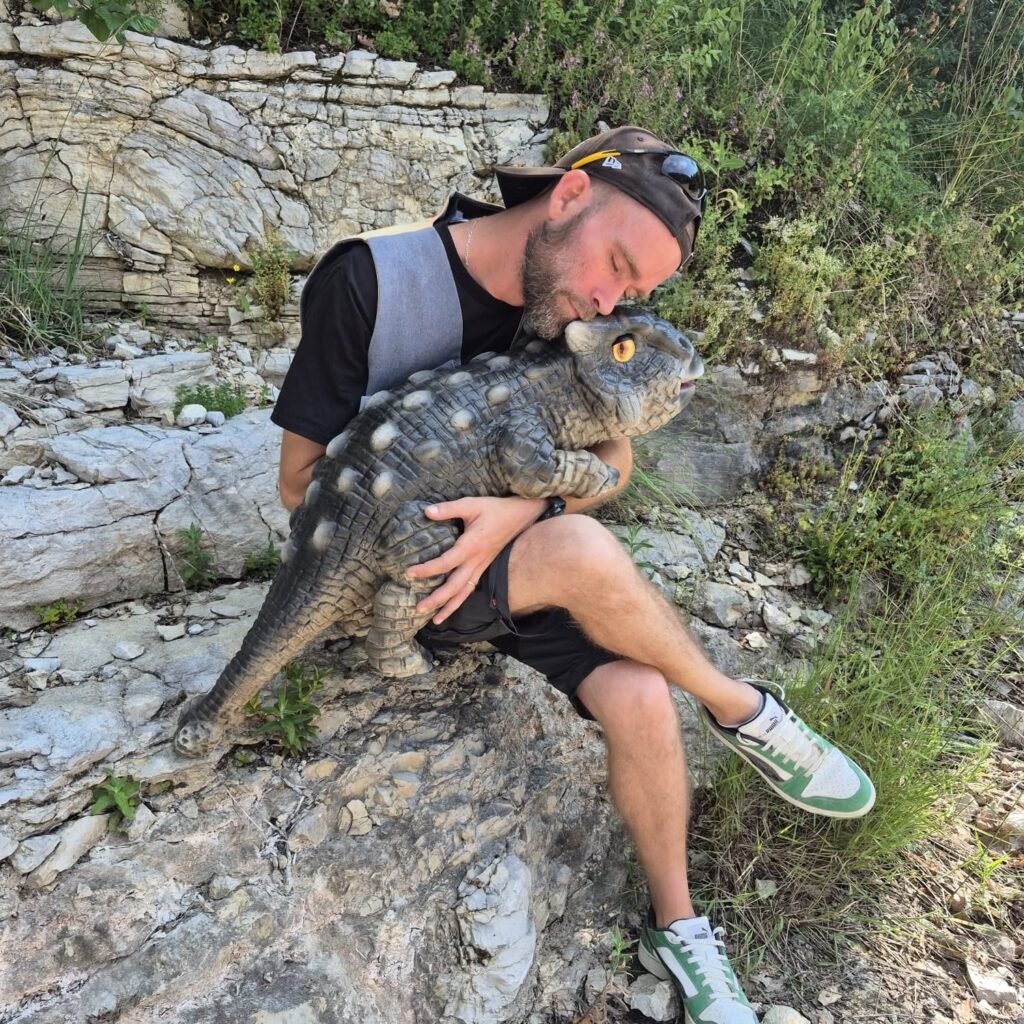
The register is a dig in progress. Research tents, field tools, structures that read as though scientists set them down last week and will be back tomorrow. Visitors are not an audience walking past a display, they are on site while the work is happening.
Morgan Fix Creative carried the tender study, the ten-year strategy, the design of every module and the art direction through to installation, with a fabrication partner building and fitting the sets.
Three interventions, all on stops that already existed. No new paths, no earthworks, no permits. A €39,000 build budget buys three or four decisions, so they had to be the right ones.
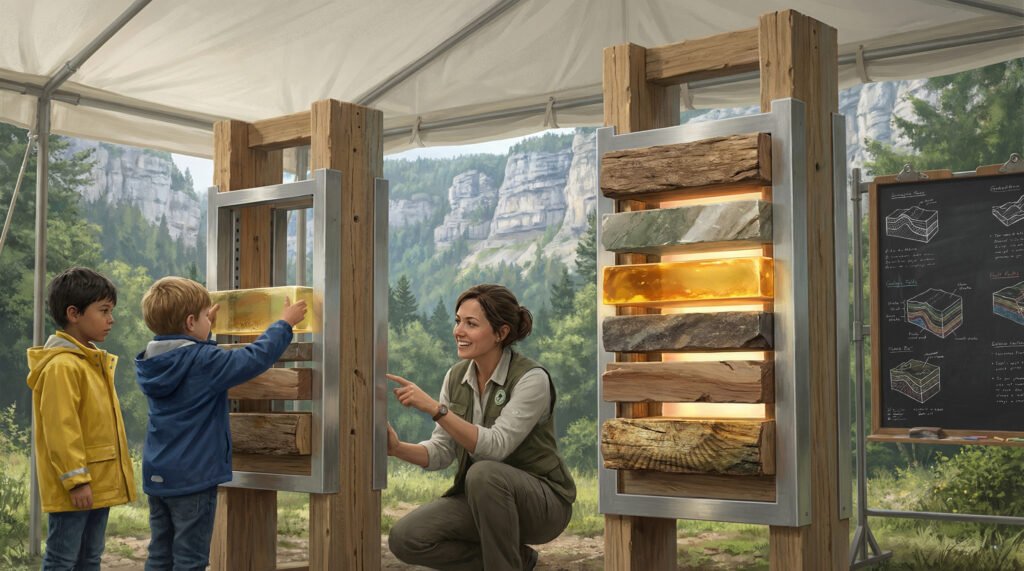
Stacking the Jura
Inside a research tent, visitors handle mineral strata and rebuild the geological sequence by hand. A low-tech mechanism accepts only the correct order, so the module teaches without an instructor. It answers the question the trail never quite did: why are the footprints here, and not two hundred metres further on? Like the water, it runs on nothing and survives a Jura winter outdoors.
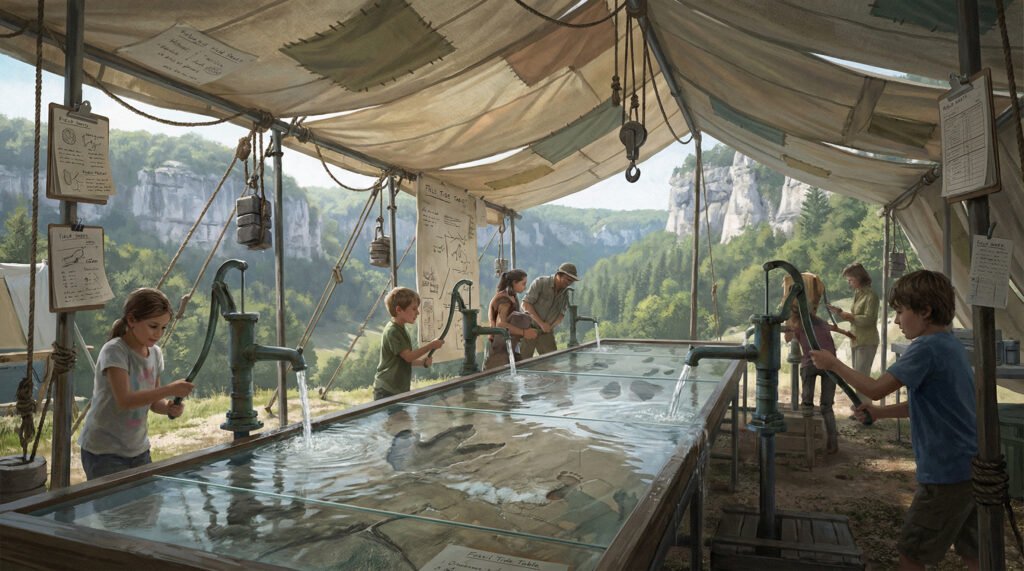
Water reveals
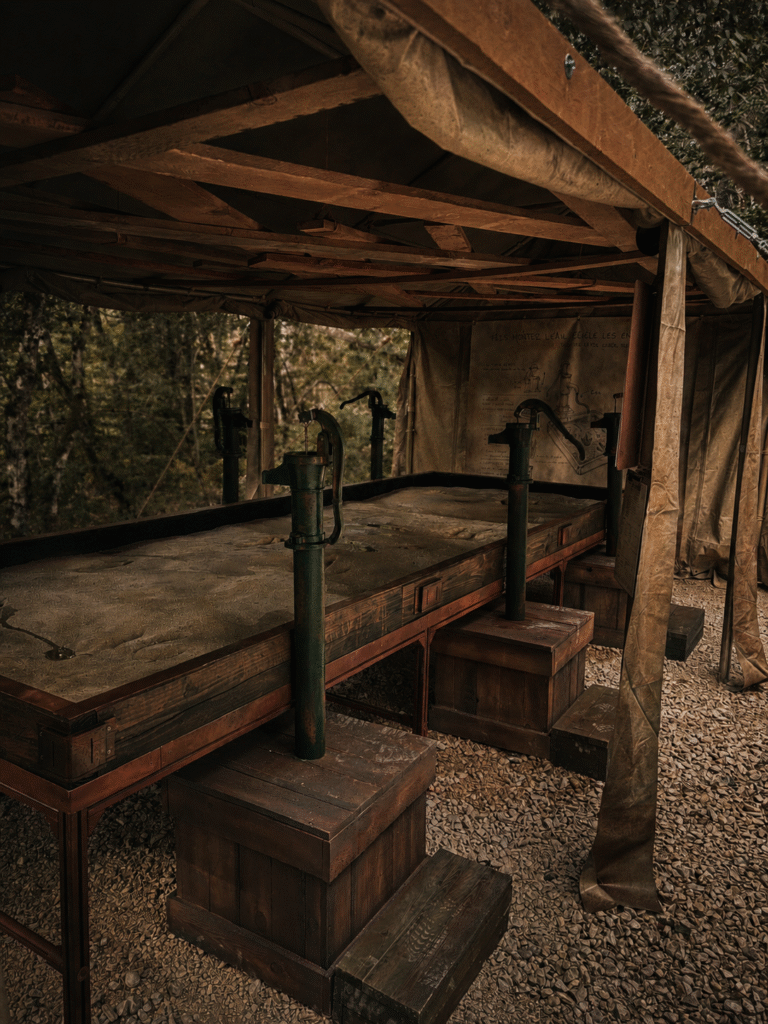
Under a field structure, visitors work a flow of water across stone by hand. Human and dinosaur prints emerge through the contrast between wet and dry, then fade as it dries, so the next family gets the same discovery. It explains why this place was once a coastal marine environment. No power, no screen, no operator, and it resets itself.
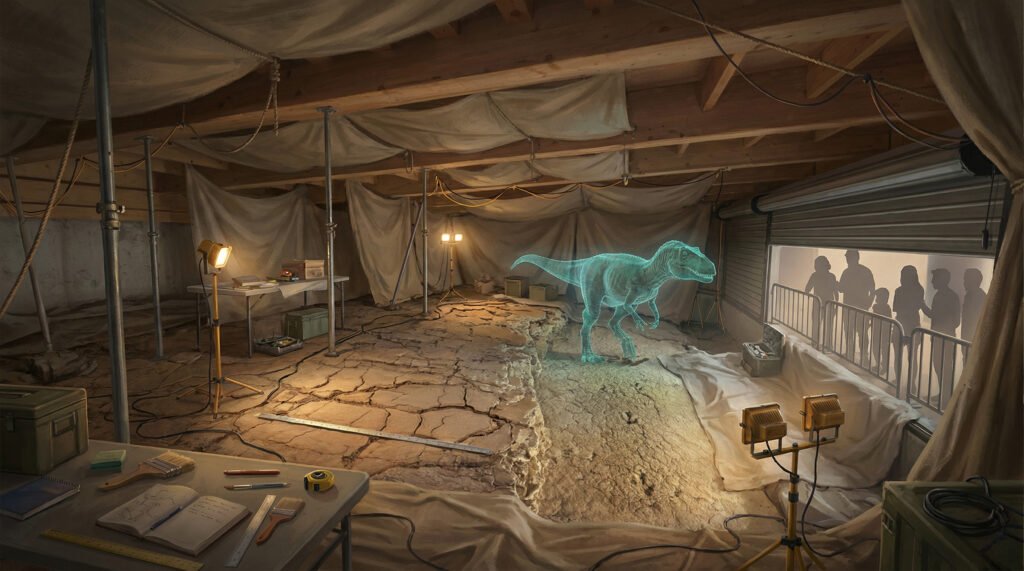
Bringing the dig up
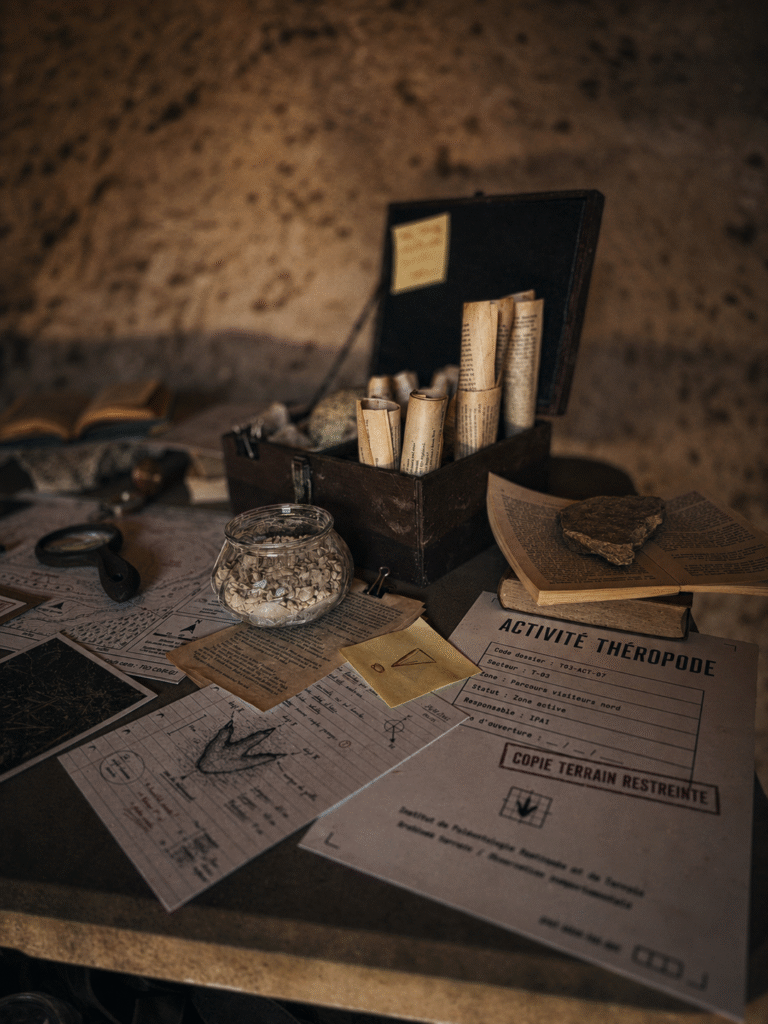
At the theropod prints, nothing was removed. The footprints stayed exactly where they were, and the setting around them changed. Palaeontologist tools left mid-task, a working surface, a structure that frames the prints instead of fencing them off. What was a marked-out area on the ground now reads as an excavation someone stepped away from an hour ago. Same footprints, same information, a completely different reason to stop and look down.
Open since Summer 2026
The operator’s view
TBD
Martin Girardon, Operations Director